Security
Locks, location, tool risk and the confidence that the vehicle is safe when the owner is not beside it.
FordPass Pro was never only an app. It was a connected-service problem for people whose vehicle is part of the business.
The surface brief was connected-vehicle product design. The real job was helping smaller commercial-vehicle owners keep work moving.
A van problem is not a feature gap. It is lost time, disrupted jobs, tools at risk, repair cost, admin and anxiety. That changed the centre of gravity from interface polish to operational confidence.
Ford's public connected-vehicle ecosystem still points at the same territory: vehicle health, live status, driver checks, issue reporting, trip records, remote control, security and fleet visibility.
The design challenge was to turn those capabilities into a service a working owner could trust at a glance, then act on when something needed attention.
Locks, location, tool risk and the confidence that the vehicle is safe when the owner is not beside it.
Remote checks, fuel or range, vehicle readiness and fewer moments where the driver has to stop to find out.
Warnings, service need, tyre pressure, assistance and the path from alert to next best action.
The product needed more than screens. It needed a model of vehicle state: what is happening, what matters, what is urgent and what the owner can do next.
That meant connecting mobile UI, service journeys, dealer handoffs, alerts, permissions and failure states into one experience. The phone became the visible edge of a much larger service system.
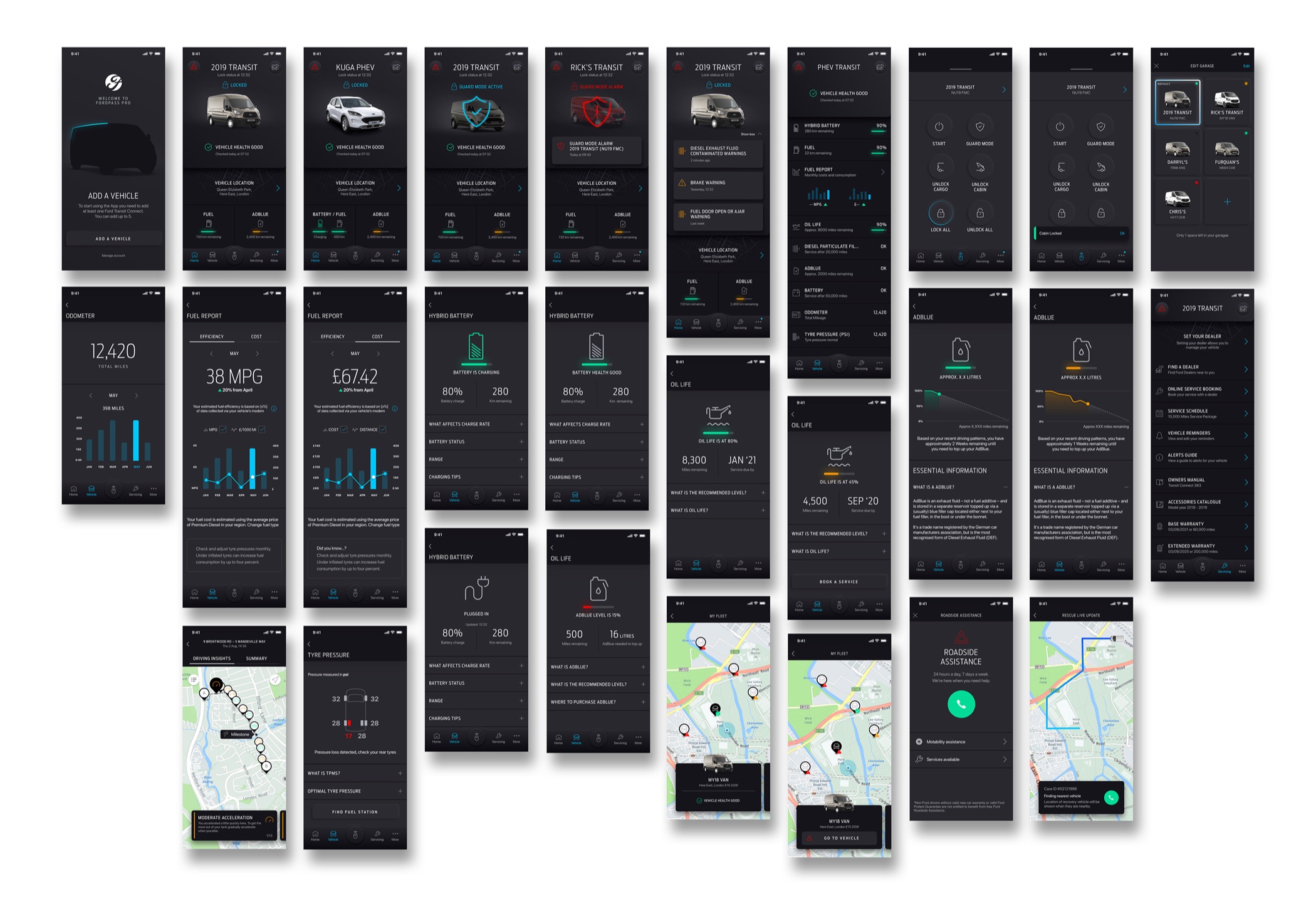
A mobile interface system spanning locks, health, alerts, fuel, maps, charging and assistance.

Journey material mapping permissions, ownership, failure states and moments where the service had to recover.

Charging work connected locate, reserve and pay behaviours to a broader electric-vehicle service experience.
The best connected-vehicle products do not ask people to admire the interface. They help them know what is true, decide what matters and keep moving.
That is where this work sits: design as the translation layer between vehicle data, commercial pressure, service operations and a person trying to get the job done.