Santander Private Banking
A public-facing private-banking proposition where brand, content and service framing have to work together.
The strongest Hogarth thread is Santander: proposition work, content hierarchy, Investment Hub material and design-guide evidence showing how public-facing banking experiences need structure underneath the brand surface.
The Hogarth period shows another dimension of the work: branded public experiences where the visible interface only succeeds if the proposition, content model and service logic underneath it are clear.
The Santander material is the stronger lead because private banking is not a simple marketing problem. It has to hold relationship banking, everyday money movement, wealth planning, investment management, international support, eligibility, servicing and reassurance in one understandable frame.
That is a design leadership problem. If the structure is weak, the experience becomes either a glossy brochure or a pile of product pages. If the structure is good, the business can explain a premium proposition, help customers find the right route and give internal teams a model they can keep using.
Looking at Santander's public Private Banking and Investment Hub material, the shape of the challenge is obvious: customers are not only choosing an account. They are trying to understand whether Santander can support a broader financial life.
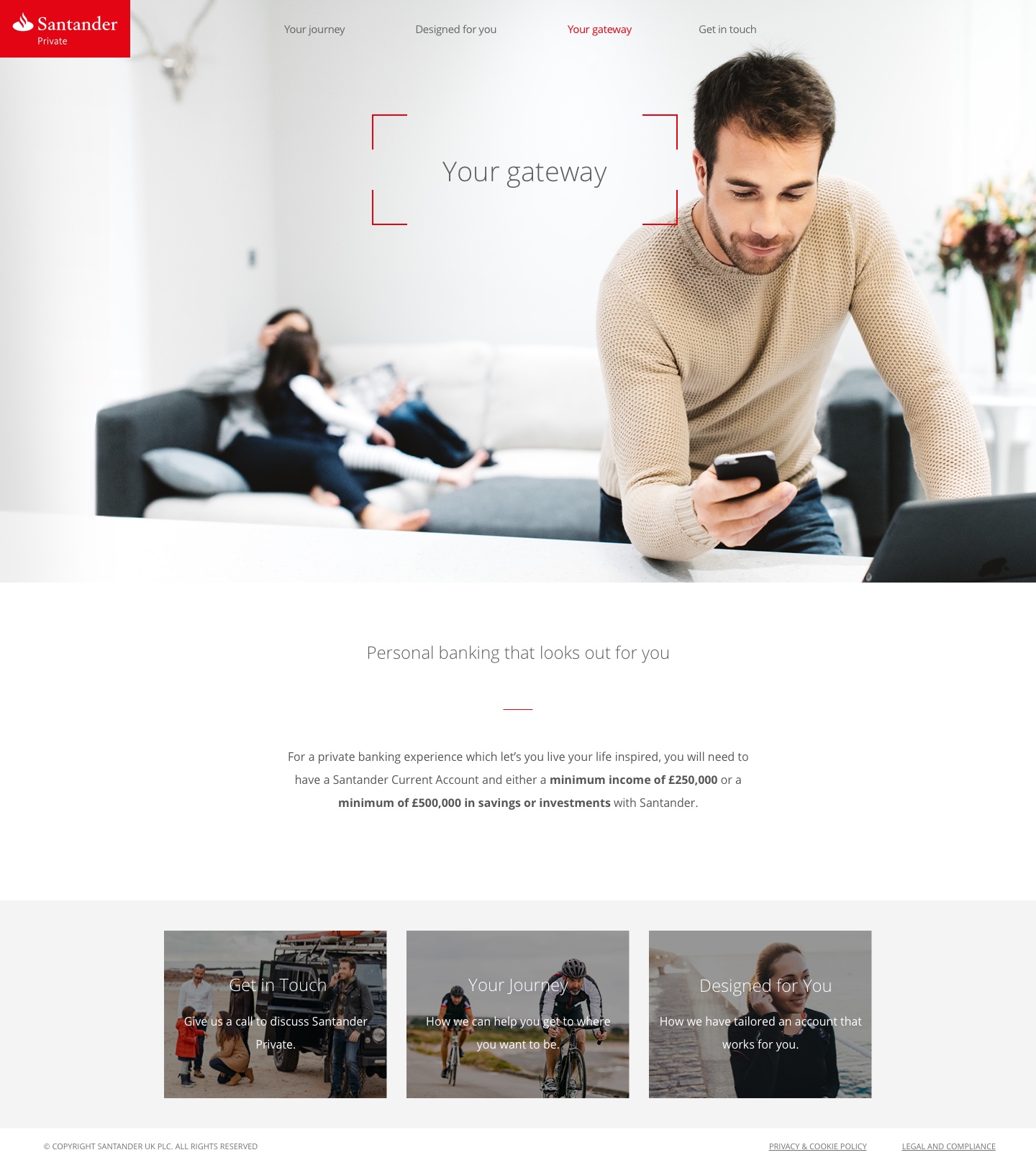
The proposition spans access to private banking, a current account, wealth planning, investment management, offers and international/private benefits. Investment Hub adds the digital servicing layer: customers can see investment value, portfolio performance, transactions, documents and account settings through the logged-in banking environment.
That combination matters because it creates several customer jobs at once. Am I eligible? What do I get? Who supports me? How does this fit into my existing banking? How do I manage investments once I am in? Where do I go when the answer is not a simple product fact?
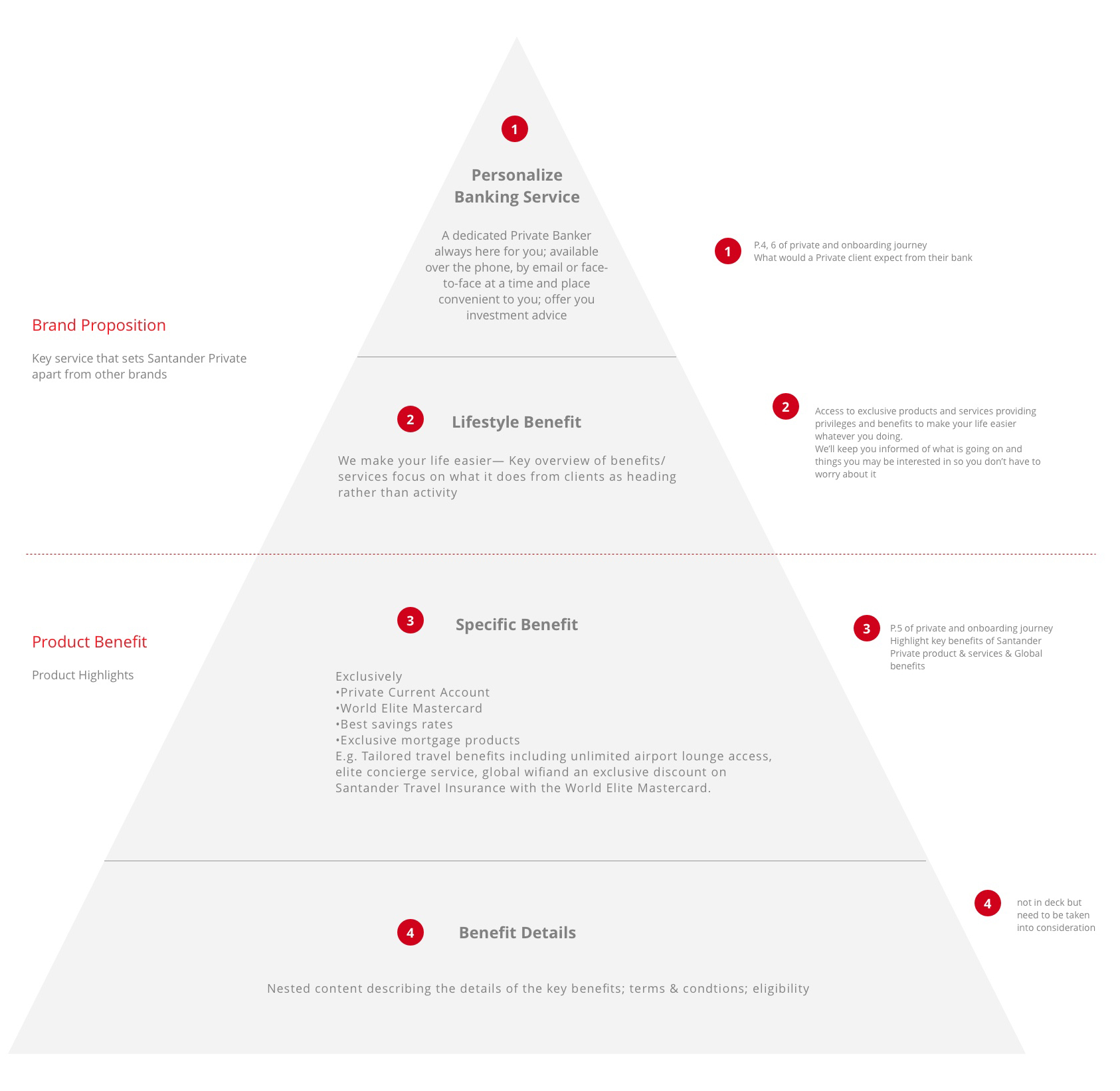
The first job is to make the promise legible. A private-banking proposition needs a clear hierarchy from brand promise to customer benefit, product detail, service evidence and next action.
Customers move between understanding, comparing, applying, getting advice, managing money and resolving questions. The experience has to follow those jobs rather than simply mirror internal product ownership.
The content model matters commercially. It decides which benefits are visible, which details support confidence and where complex financial information becomes manageable rather than intimidating.
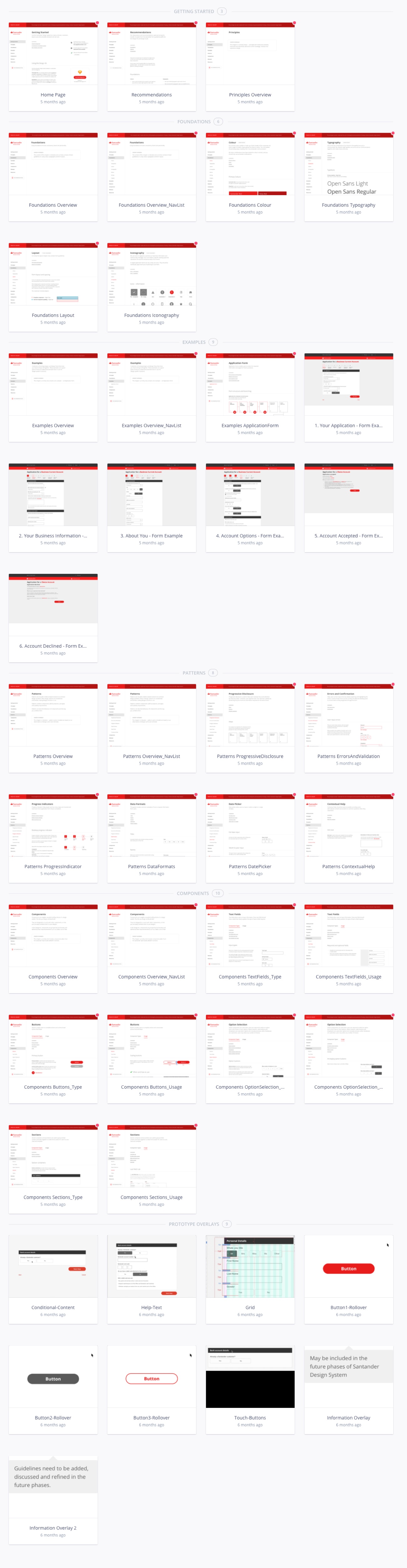
Design-guide and component evidence matters because banking experiences are maintained by many people over time. The system has to help later teams make consistent decisions without re-litigating the basics.
The commercial point is not that the pages look polished. It is that clear structure reduces the cost of explanation. A premium banking proposition has to earn trust quickly, then support a longer relationship across products, channels and moments of need.
Good design work makes that easier for the customer and more manageable for the organisation. It helps marketing avoid vague promise, helps product avoid disconnected features, helps service avoid avoidable confusion and helps governance see how important information is presented.
This is why the archive belongs in the same body of practice as the later SaaS, fintech and service work. The surface changed. The leadership question stayed familiar: what is the model underneath the experience, and can the organisation use it to make better decisions?
A public-facing private-banking proposition where brand, content and service framing have to work together.